 EN
 ES
 FR
 FA
 JA
 DE

In modern automotive and heavy-duty industrial wiring harnesses, choosing the correct connector housing architecture is critical for long-term signal integrity and power transmission. Operating environments expose electrical interconnects to severe vibration, high-pressure washdowns, thermal shock, and aggressive chemical fluids.
To ensure harness reliability, design engineers must evaluate three core metrics: ingress protection ratings, mechanical retention mechanisms, and thermal envelope stability.
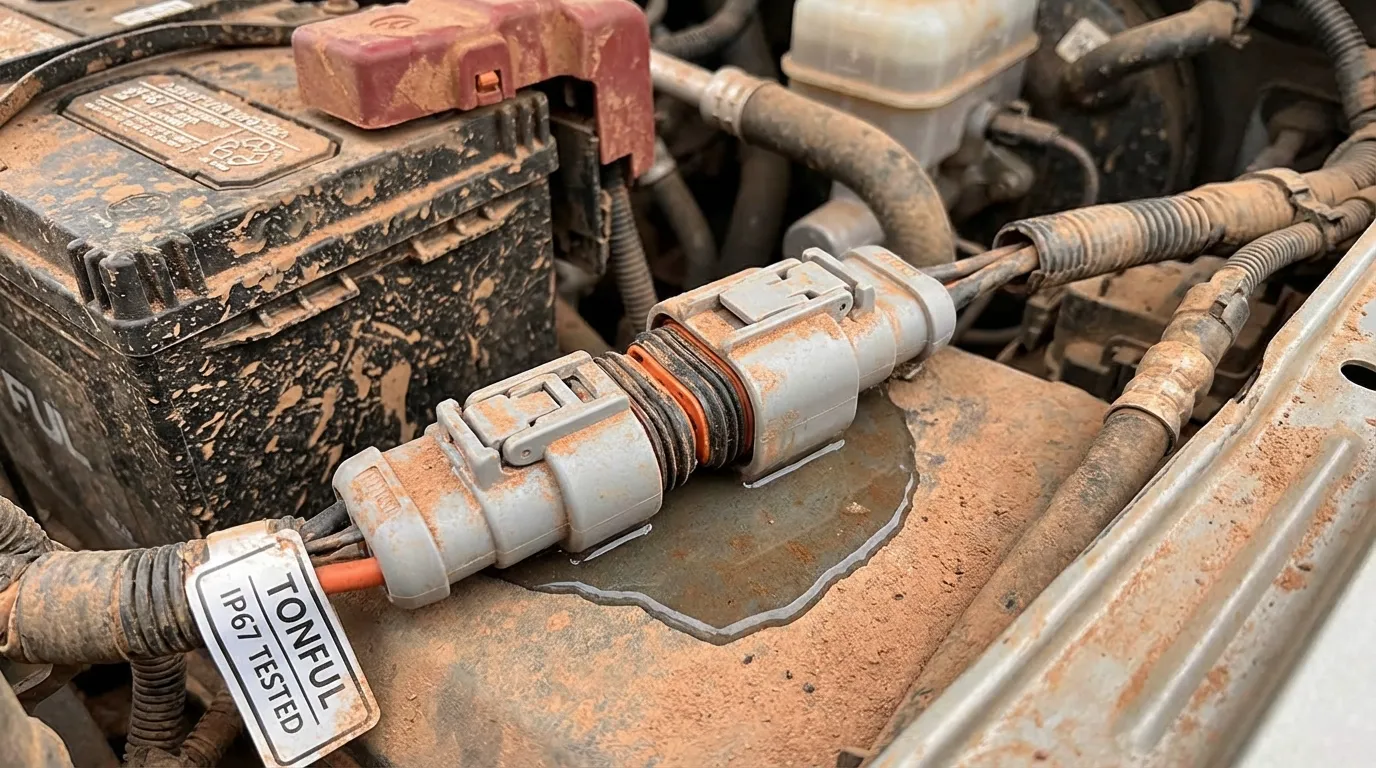
1. Environmental Ingress Standards: IP68 vs. IP6K9K
Sealed automotive connectors must prevent moisture and particulate entry into the contact cavity to eliminate oxidation and short circuits. Sealing capability is standardized under international guidelines such as ISO 20653 road vehicles ingress protection standards and SAE USCAR-2 performance specifications.
- IP67 / JIS C 0920 Grade 7: Ensures protection against continuous dust ingress and short periods of water immersion (up to 1 meter depth for 30 minutes). Compact wire-to-wire systems like the JST 02T-JWPF-VSLE-S 2-pin plug housing utilize pre-assembled silicone wire and interfacial rubber gaskets to satisfy JIS C 0920 Level 7 immersion specs in a 2.00 mm pitch footprint.
- IP68 / IP6K9K: Required for under-chassis, powertrain, and external commercial vehicle sensors subject to high-pressure thermal steam cleaning. Connectors like the TE DEUTSCH DTM06-4S 4-position connector employ heavy-duty thermoplastic shells and elastomeric rear grommets engineered to withstand 100 bar (1450 psi) water spray at temperatures up to +125°C.
2. Terminal Position Assurance (TPA) and Vibration Resistance
Vibration induced by engine operation or rugged terrain can cause terminal back-out—a condition where contacts unseat from the housing cavity. To prevent partial insertion and terminal displacement, automotive-grade housings incorporate dual-locking architecture:
- Primary Housing Lance: Holds the crimp terminal within the thermoplastic cavity upon insertion.
- Secondary Lock / TPA: A pre-set secondary retainer or wedgelock that cannot be fully engaged unless every terminal is fully seated.
For instance, the Aptiv Metri-Pack 150 12065287 housing utilizes a robust 2-row layout with secondary locks for 14A rated power distribution. Similarly, ultra-compact board-to-wire and wire-to-wire configurations such as the Hirose ZE05-4S-HU/R 2.00mm plug incorporate a factory pre-set retainer that delivers high contact retention forces under severe thermal cycling from -40°C to +125°C.

3. High-Density Pitch Optimization in Sensor Harnesses
As electronic control units (ECUs), battery management systems (BMS), and ADAS modules multiply in modern vehicles, spatial availability for wiring routing continues to decrease. Selecting high-density 2.00 mm centerlines allows engineers to reduce harness bundle diameters without sacrificing current ratings or mechanical lock stability.
When performing cross-reference evaluations or replacement selection for legacy harness designs, engineers should verify:
- Terminal mating width compatibility (e.g., 0.64 mm, 1.5 mm, Size 20 pin systems)
- Wire insulation outer diameter limits (to ensure proper silicone seal compression)
- Mating force and anti-snag shroud design on the primary latch

Conclusion & Cross-Reference Procurement
Matching precise mechanical specifications with environmental standards ensures zero field failures in automotive electrical systems. Suzhou Suqin maintains an extensive inventory of automotive housings, sealed plug assemblies, and compatible crimp terminals to support prototype engineering and bulk production requirements.